Naman & SURBHI
"Project:Us"
It all started on the very first day of college. The induction had just begun at XLRI and the room was buzzing — strangers turning into teammates, everyone finding their people, except Surbhi, who stood quietly in a corner, a little lost in the noise of it all. That's when Naman walked up to her. No grand gesture, no calculated move — just a simple approach that neither of them knew would change everything.
They were put in the same project group that day. And then the next. And the one after that. Somewhere between deadlines and late nights and honest conversations, something quietly took root — the kind of connection that doesn't announce itself, it just grows until one day you can't imagine it not being there.
It was Naman who finally said it out loud. After college ended, he told her what he had carried with him since that first day — that she had always been on his mind. It wasn't a grand proposal. It was just the truth, spoken at the right time, to the right person.
And Surbhi said yes to all of it.
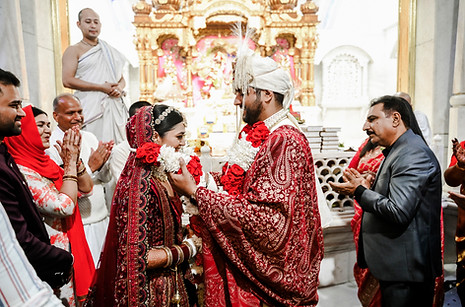
Their wedding was everything they are — warm, intimate, and deeply rooted in meaning. In the post-Covid world, when everyone was relearning what truly mattered, they chose soul over spectacle. The celebrations carried an easy, unscripted joy throughout. And then came ISKCON where beneath ancient spires, sacred chants, and the quiet gaze of Krishna himself, they took their pheras beside a fire. No grand excess. No unnecessary noise. Just two souls, a handful of their most loved people, and every ritual carrying the weight it was always meant to carry.
VISUAL JOURNAL
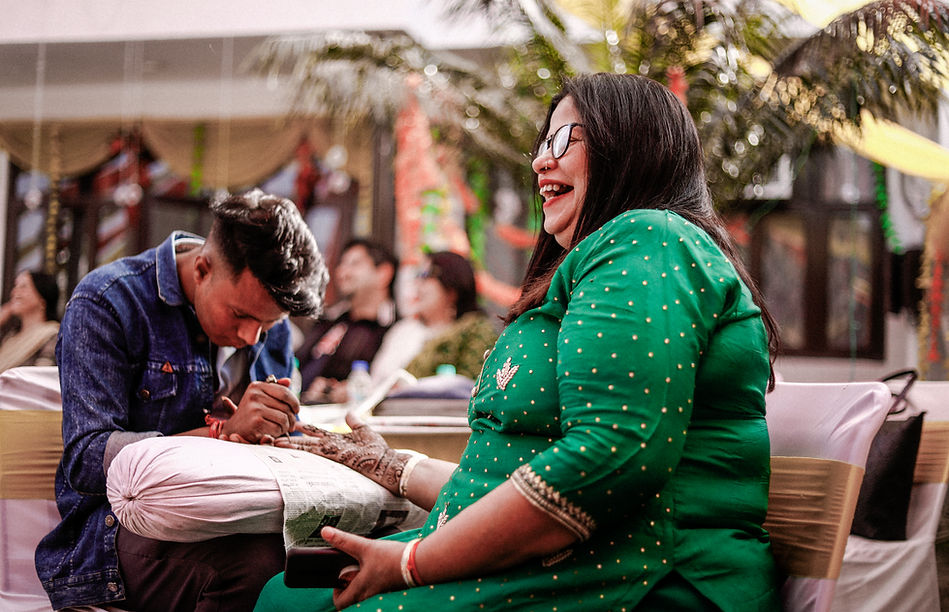
The Mehndi
Surrounded by their closest people under open skies and yellow drapes, the mehendi was less a ceremony and more a celebration of a love everyone had already fallen for.




QUIET
LOOK
LOVE
of
the


Ring Ceremony
Dressed in deep blue and surrounded by a thousand flowers, they exchanged rings the way they do everything — with ease, with joy, and with eyes only for each other.


The Wedding
ISKCON Delhi gave them something no banquet hall ever could — stillness, sanctity, and a ceremony that felt like it belonged to the soul and not just the occasion.